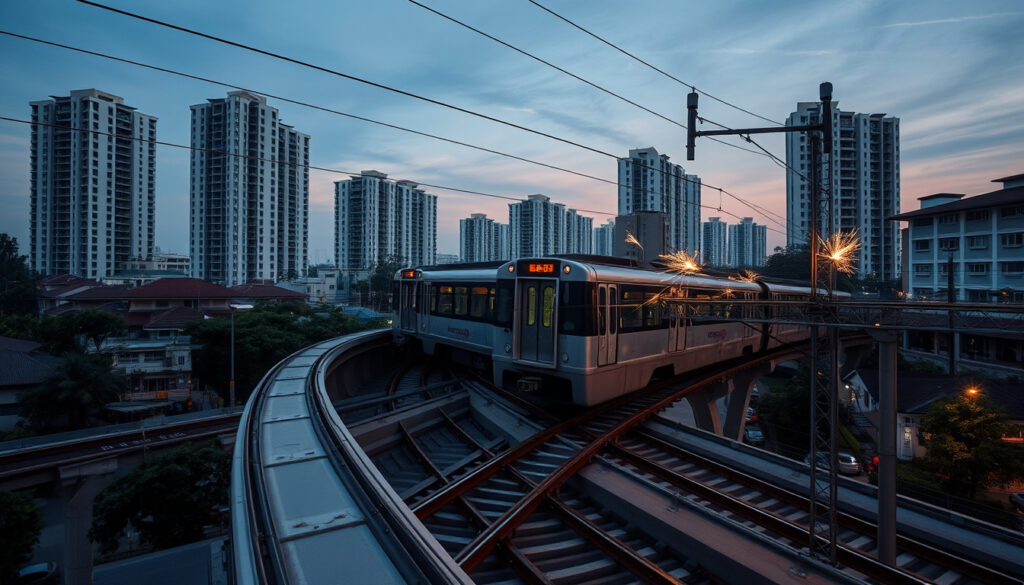
Sengkang Punggol LRT Power Fault – Timeline Causes and Updates
The Sengkang-Punggol Light Rail Transit (SPLRT) system experienced two significant power faults within days of each other in August 2025, disrupting services for thousands of commuters across 29 stations. Both incidents, occurring on August 12 and August 15, were attributed to power supply failures at the Sengkang Depot Substation and related infrastructure issues.
SBS Transit, which operates the SPLRT under the SMRT group, confirmed that the first disruption also affected the North East Line (NEL), creating a compounded impact on public transport in the northeastern region of Singapore. The operator has since provided updates on service resumption and alternative transport arrangements for affected passengers.
This article provides a comprehensive timeline of events, details on the causes under investigation, the scope of affected stations, and the measures taken to restore services. The information reflects developments as of August 15, 2025, based on statements from SBS Transit and transport news reports.
What Caused the Sengkang Punggol LRT Power Fault?
Preliminary findings from SBS Transit indicate that both power faults originated from failures within the power supply infrastructure at or near the Sengkang Depot Substation. The first incident on August 12 involved a switchboard failure that caused a flashover in a voltage transformer, which subsequently tripped both the main and backup 22 kV power supplies simultaneously.
The second disruption on August 15 was triggered by a cable fault detected between the Farmway and Kupang stations at approximately 8:40am. According to SBS Transit CEO Jeffrey Sim, the backup switchboard that would have provided redundancy had been damaged during the August 12 incident, leaving the system operating on a single switchboard. This vulnerability meant that when the cable fault occurred, there was no backup power pathway available to maintain service continuity.
Power Infrastructure Failures
The August 12 incident revealed a critical weakness in the power distribution architecture. When the switchboard failure caused a flashover in the voltage transformer, both the primary and secondary 22 kV supplies were knocked out simultaneously. This dual failure prevented the automatic failover that redundant systems are designed to provide.
During the August 15 event, the damaged backup switchboard from three days earlier remained unrepaired. This meant that when the cable fault between Farmway and Kupang stations disrupted the network, the entire system lost power. Ten trains were left stalled across the network, requiring manual detraining procedures before recovery operations could proceed.
Both incidents originated from the Sengkang Depot Substation infrastructure, highlighting how central power supply systems directly impact the broader rail network’s reliability.
Service Impact Overview
August 12, 2025
August 15, 2025
10 hours (Aug 12) / 4 hours (Aug 15)
All 29 SPLRT stations
The dual incidents affected all 29 stations on the Sengkang and Punggol LRT loops. On August 12, the power failure extended beyond the SPLRT, also halting North East Line services between Farrer Park and Punggol Coast stations. Station blackouts were reported at multiple locations along both lines, with commuters experiencing extended periods without service during the morning rush hour.
- Both power faults traced to failures originating at or near Sengkang Depot Substation
- August 12 incident tripped both main and backup 22 kV power supplies simultaneously
- Damaged backup switchboard from August 12 was not repaired before the second fault
- August 15 cable fault stalled 10 trains across the network
- SBS Transit CEO confirmed the interconnection between the two incidents
- All passengers, including those with mobility aids, were safely detrained
| Detail | August 12 Incident | August 15 Incident |
|---|---|---|
| Primary Cause | Switchboard flashover at Sengkang Depot | Cable fault between Farmway and Kupang |
| Power Supply Status | Both main and backup 22 kV tripped | Single switchboard operation only |
| Lines Affected | SPLRT and NEL | SPLRT only |
| Total Disruption Duration | Approximately 10 hours | Approximately 4 hours |
| Full Service Resumption | Around 9:20pm | 5:15pm (bi-directional) |
| Trains Stalled | Not specified | 10 trains |
Timeline of the Sengkang Punggol LRT Disruption
The following chronology outlines key events during both power fault incidents, compiled from reports by transport operators and news outlets covering the disruptions.
August 12, 2025 Events
The first disruption began mid-morning on Tuesday, August 12. Power supply to both the SPLRT and NEL systems was interrupted following the failure at the Sengkang Depot Substation. Transit staff and emergency crews worked through the afternoon and evening to restore services, with full operations resuming approximately 10 hours after the initial fault.
- Around 11:00am — Power fault reported; services on SPLRT and NEL disrupted
- 11:17am — No NEL service between Farrer Park and Punggol Coast; free bus services activated
- 11:22am — All SPLRT services suspended
- 3:34pm — Power to Sengkang LRT restored
- 4:04pm — Punggol LRT services resume
- Approximately 9:20pm — Full service on both lines restored after roughly 10 hours
August 15, 2025 Events
Three days after the first incident, a second power fault occurred during the Friday morning rush hour. The cable fault between Farmway and Kupang stations triggered a system-wide outage affecting all 29 SPLRT stations. Recovery operations proceeded more quickly than the first disruption, with full bi-directional service resuming by the late afternoon.
- 8:40am — Cable fault detected; all 29 SPLRT stations affected
- 8:50–8:52am — Trains stalled across the network, including reports of lights going off at Punggol stations
- 11:05am — Progressive service resumption begins on Sengkang LRT
- 11:20am — Progressive service resumption begins on Punggol LRT
- 12:32pm — Full Punggol LRT service restored
- 12:54pm — Full Sengkang LRT service restored (approximately 4 hours total)
- 3:15–5:00pm — Single-direction operation maintained for cable inspection
- 5:15pm — Bi-directional service fully resumed
Following the August 15 service restoration, SBS Transit conducted cable inspections and operated limited services while monitoring system stability. Additional safety checks were performed before resuming normal bi-directional operations.
Impact and Current Status of the LRT Service
Both power faults created significant disruptions for daily commuters relying on the SPLRT for transportation in the northeastern corridors of Singapore. The incidents occurred during peak travel periods, amplifying the impact on affected passengers who faced unexpected delays and service suspensions.
Scope of Affected Stations
All 29 stations across the Sengkang and Punggol LRT loops experienced complete service suspension during both incidents. The SPLRT consists of two separate loops serving the towns of Sengkang and Punggol, and both loops were affected simultaneously during each power fault. The August 12 disruption had an even broader impact, as it also halted NEL services between Farrer Park and Punggol Coast stations, effectively disrupting train services across a significant portion of the northeastern transport network.
Station blackouts were reported at multiple locations during the August 12 incident, with commuters describing dark platforms and electronic suspension notices displayed on information boards. On August 15, witnesses at Punggol stations reported train lights going off around 8:50am as the fault took effect, leaving passengers in temporary darkness until emergency protocols were activated.
Commuter Experience During the Disruption
Commuters who relied on the SPLRT during both incidents described challenging experiences. The morning rush hour timing of both faults meant that large numbers of passengers were already onboard trains or waiting at stations when the power failures occurred. One commuter at Punggol reported that the train lights went off at approximately 8:50am on August 15, leaving passengers in the dark as the system shut down.
Safe detraining procedures were implemented for the ten trains that stalled on August 15. Transport staff assisted passengers, including those with mobility aids, in exiting the trains safely. This process, while necessary for safety, contributed to extended recovery times as crews had to manually evacuate multiple trains across different locations on the network.
Frequent users of the SPLRT expressed particular frustration with the second outage occurring just three days after the first major disruption. The recurrence of power-related issues within such a short timeframe heightened concerns about the reliability of the system and the adequacy of backup infrastructure.
Current Service Status
Full services on both the Sengkang and Punggol LRT loops were restored following the August 15 incident. As of the information available, no further disruptions had been reported after the 5:15pm resumption of bi-directional services on that day. SBS Transit has indicated that preliminary investigations into the causes of both incidents are ongoing, with particular attention being paid to the cable fault identified between Farmway and Kupang stations.
SBS Transit has stated that preliminary probes are continuing to determine the full details of the cable fault and any contributing factors to both power supply failures.
Alternative Transport Options During the Fault
To maintain mobility for affected commuters during both disruptions, SBS Transit deployed alternative transport arrangements. These included free regular bus services and dedicated bridging bus services that stopped at designated locations near the affected LRT stations.
Bus Bridging Services
Free bus services were activated following the suspension of LRT operations on both August 12 and August 15. These services picked up passengers at designated stops positioned near the affected stations, providing a ground-level alternative to the suspended rail services. The bridging buses operated along routes that paralleled the LRT loops, connecting commuters to interchange stations where they could access other rail lines.
During the August 12 incident, the free bus services also covered portions of the NEL route, as that line was simultaneously affected by the power fault originating at the Sengkang Depot Substation. This multi-line impact required coordinated bus deployment to serve commuters who normally rely on both the SPLRT and NEL for their daily commutes.
Commuter Guidance
When rail services experience unexpected disruptions, commuters are advised to check for announcements at stations, monitor official SBS Transit social media channels for real-time updates, and utilize the bus bridging services deployed during service suspensions. Planning alternative routes in advance can help reduce travel delays during similar events.
For those living in the Sengkang and Punggol areas, the incidents highlight the value of familiarizing oneself with available bus routes that connect to other MRT lines, such as the Sengkang and Punggol bus interchanges, which provide connections to the North East Line and other transport options.
Confirmed Information and Areas Under Investigation
The following summarizes what has been confirmed about the August 2025 SPLRT power faults and what remains under investigation by SBS Transit and relevant authorities.
| Established Information | Information Under Investigation |
|---|---|
| Two power faults occurred on August 12 and August 15, 2025 | Complete root cause analysis of the August 12 switchboard failure |
| All 29 SPLRT stations were affected during both incidents | Full technical assessment of the cable fault between Farmway and Kupang |
| August 12 incident lasted approximately 10 hours | Timeline for permanent repair of the damaged backup switchboard |
| August 15 incident lasted approximately 4 hours | Whether additional infrastructure vulnerabilities exist in the system |
| August 15 cable fault stalled 10 trains | Details on the condition of aging infrastructure components |
| SBS Transit CEO linked the two incidents via Facebook statement | Preventive measures being implemented to avoid future occurrences |
| All passengers were safely detrained during both incidents | Final investigation conclusions from SBS Transit |
Official Responses and Statements
SBS Transit, the operator of the SPLRT under the SMRT group, has provided public updates regarding both incidents. The operator’s CEO Jeffrey Sim issued an apology via social media following the August 15 disruption, acknowledging the impact on commuters and explaining the interconnection between the two power faults.
In his statement, Sim explained that the backup switchboard damaged during the August 12 incident had not been fully repaired or replaced at the time of the second fault. This meant that when the cable fault occurred on August 15, the system was operating on a single switchboard with no redundancy available. The operator has committed to investigating the causes and implementing measures to prevent similar recurrences.
The second power fault on August 15 was directly related to damage sustained during the August 12 incident. Our system was operating with reduced redundancy, which contributed to the extent of the disruption.
— SBS Transit CEO Jeffrey Sim, via social media
Preliminary findings released by SBS Transit indicated that the August 12 incident originated from a switchboard failure causing a flashover in a voltage transformer at the Sengkang Depot Substation. This equipment failure tripped both the main and backup power supplies simultaneously, a scenario that prevented the expected failover to backup systems. The August 15 cable fault between Farmway and Kupang stations was identified as the trigger for the second system-wide outage, with the previously damaged backup infrastructure unable to provide the expected redundancy.
SBS Transit has acknowledged responsibility for the disruptions and committed to a thorough investigation. The operator’s preliminary findings have been shared with relevant authorities for review.
Summary and Service Recovery
The Sengkang-Punggol LRT system experienced two significant power faults in August 2025, disrupting services for approximately 10 hours on August 12 and 4 hours on August 15. Both incidents originated from power supply failures at the Sengkang Depot Substation, with the second disruption exacerbated by damage sustained during the first event that left backup systems unavailable.
All 29 stations across the Sengkang and Punggol LRT loops were affected during both incidents. The August 12 disruption also impacted the North East Line between Farrer Park and Punggol Coast. SBS Transit deployed free bus services and bridging transport during both events, and all passengers, including those requiring special assistance, were safely evacuated from stalled trains.
Full services have since been restored on both LRT loops, with bi-directional operations resuming on August 15 at 5:15pm. Preliminary investigations are ongoing, and the operator has committed to addressing the infrastructure vulnerabilities identified during these incidents. Commuters are encouraged to monitor official updates from SBS Transit for the latest information on service status and any further developments. For those seeking housing options near reliable transport connections in Singapore, consider reviewing current rental listings that may offer convenient access to alternative commute routes.
Frequently Asked Questions
When did the Sengkang Punggol LRT power faults occur?
Two power faults occurred in August 2025: the first on Tuesday, August 12, and the second on Friday, August 15.
What caused the power faults?
The August 12 incident was caused by a switchboard failure at Sengkang Depot Substation. The August 15 disruption resulted from a cable fault between Farmway and Kupang stations, compounded by damage to backup systems from the first incident.
How long did the disruptions last?
The August 12 disruption lasted approximately 10 hours, with full service resuming around 9:20pm. The August 15 incident lasted approximately 4 hours, with full bi-directional service restored by 5:15pm.
Which stations were affected?
All 29 stations across the Sengkang and Punggol LRT loops were affected during both incidents. The August 12 disruption also impacted North East Line stations between Farrer Park and Punggol Coast.
What alternative transport was provided?
SBS Transit deployed free regular bus services and bridging bus services at designated stops near affected stations during both disruptions.
Is the LRT service back to normal?
Yes, full services on both the Sengkang and Punggol LRT loops were restored following the August 15 incident. No further disruptions had been reported as of the available information.
Who operates the Sengkang Punggol LRT?
The Sengkang-Punggol LRT is operated by SBS Transit, which operates under the SMRT group.
What is being done to prevent future disruptions?
SBS Transit has stated that preliminary investigations are ongoing to identify the root causes of both incidents and determine appropriate preventive measures. The damaged backup switchboard has been identified as a contributing factor to the second incident.
Were there any injuries during the incidents?
No injuries were reported. All passengers, including those with mobility aids, were safely detrained from the stalled trains before recovery operations proceeded.
What should commuters do during future disruptions?
Commuters should monitor official SBS Transit announcements, check social media channels for real-time updates, and utilize the bus bridging services deployed during service suspensions. Planning alternative routes in advance is also recommended.
More related posts
 Cast of I Not Stupid 3: Child Actors and Full Cast 2024
 The Queen of News 2: Cast, Release, Watch Online & Ending
 DAZN Club World Cup 2025: Stream All 63 Matches Free
 Scissor Cut Curry Rice: Singapore’s Gooey Hawker Delight
 Best Cashback Credit Card: Top Picks and How to Choose
 EVA Air Flight Attendant Died: Milan Flight Incident
 To No Avail Meaning: Definition, Usage, and Examples