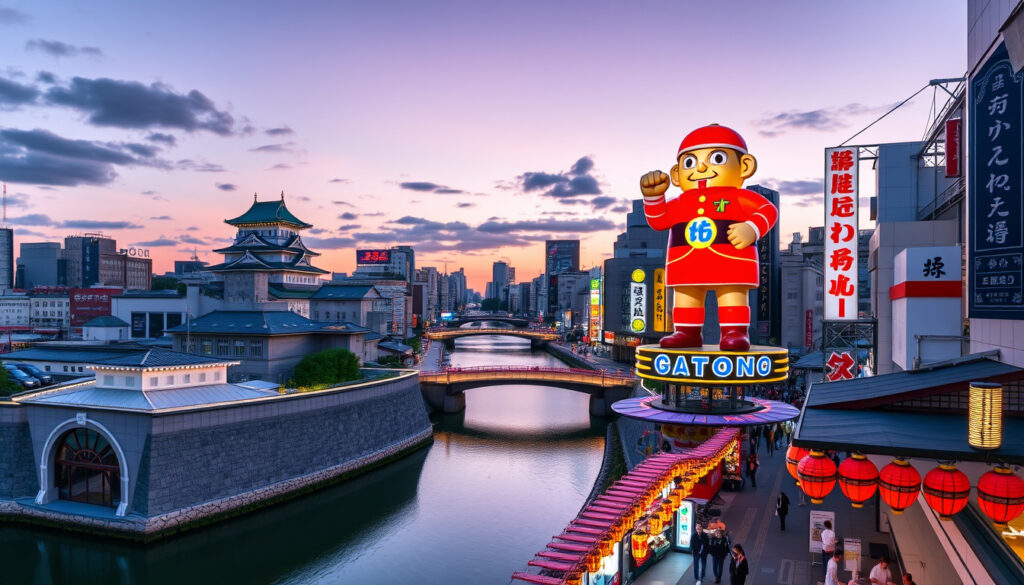
Where to Go in Osaka: Neighborhoods, Attractions & Itinerary
Most first-time visitors land in Tokyo and wonder whether they should squeeze in Osaka too; the short answer is yes, because with more than 12 million people passing through its streets each year, Osaka runs on its own rhythm — louder, more food-obsessed, and split into neighbourhoods that each feel like a different city. Picking the right area for your style is what turns a short stop into a trip you will not forget.
Population of Osaka: 2.7 million ·
Osaka Castle built: 1583 ·
Number of wards in Osaka: 24 ·
Annual visitors to Osaka: over 12 million ·
Dotonbori canal length: 2.5 km
Quick snapshot
- Osaka Castle was built in 1583 by Toyotomi Hideyoshi (Inside Osaka (local travel guide))
- Dotonbori is the entertainment heart of the city (Bon Traveler (travel publication))
- Japan’s travel advisory is Level 1 — Exercise normal precautions (U.S. Department of State (official advisory))
- Exact crime statistics for specific wards are not publicly available in a simple format
- The “5 minute rule” is a cultural guideline, not a law
- The annual visitor count of over 12 million is an estimate and may vary by source
- Osaka Castle construction began in 1583 (Inside Osaka (local travel guide))
- Universal Studios Japan opened in 2001 — a major draw for family travellers (Nerd Nomads (travel guide))
- First-timers should prioritise Minami (Namba/Dotonbori) for the full Osaka experience (Lonely Planet (travel authority))
- A 2-3 day itinerary covers the essential sights (Bon Traveler (travel publication)) (Lonely Planet (travel authority))
Osaka’s key stats in one view — five numbers that give you the scale of the city at a glance.
| Label | Value |
|---|---|
| Population | 2.7 million |
| Area | 225 km² |
| Number of wards | 24 |
| Main airport | Kansai International Airport (KIX) |
| Famous dish | Takoyaki and Okonomiyaki |
| Main visitor hubs | Kita (Umeda) and Minami (Namba/Dotonbori) — Inside Osaka (local travel guide) |
| Top attraction | Dotonbori — Bon Traveler (travel publication) |
| Safety advisory (US) | Level 1: Exercise normal precautions — U.S. Department of State (official advisory) |
Where should we go in Osaka?
Overview of Osaka’s main districts
Osaka’s city centre splits cleanly into two halves: Kita (Umeda) to the north and Minami (Namba/Dotonbori) to the south. Kita is the business and shopping hub, home to the Umeda Sky Building and Grand Front Osaka, while Minami is the city’s entertainment and food district, packed with bars, street food stalls, and the famous Dotonbori canal. As Inside Osaka (local travel guide) explains, this north-south split is the simplest way to understand the city’s layout.
How to choose based on your interests
- Food and nightlife: Minami — Dotonbori, Kuromon Market, and Shinsaibashi are all here. Nerd Nomads (travel guide) calls Minami “Osaka’s best-known entertainment district.”
- Shopping and skyline: Kita — Umeda Sky Building and Grand Front Osaka dominate. Bronwyn Townsend (travel blog) lists the Sky Building as a frequent itinerary stop.
- Budget and retro vibes: Shinsekai and Tennoji — cheap eats, Tsutenkaku Tower, and a nostalgic atmosphere. Nerd Nomads (travel guide) notes Shinsekai is “an older part of Osaka with inexpensive food options.”
- Family and theme parks: Osaka Bay Area — best base for Universal Studios Japan and Osaka Aquarium Kaiyukan (Nerd Nomads (travel guide)).
Minami gives you the classic Osaka chaos and food scene. Kita gives you better transport connections for day trips to Kyoto, Nara, Himeji, and Kobe. First-timers who choose Minami get the full sensory experience; those who choose Kita trade late-night bustle for day-trip efficiency.
The pattern: Osaka’s neighbourhood choice is less about “good vs bad” and more about pace. Pick Minami if you want to be in the middle of the action until midnight. Pick Kita if you prefer a shorter walk to a bullet train in the morning.
What is the nicest part of Osaka?
Umeda: upscale shopping and skyline
- Umeda Sky Building offers a free observation deck at sunset. Bronwyn Townsend (travel blog) includes it as a recommended stop in Kita itineraries.
- Grand Front Osaka is a major shopping and dining complex.
- Osaka Station is the city’s busiest transport hub, connecting to Kyoto in 30 minutes by express train.
Who it is for: travellers who want a polished urban base with easy day-trip access. Less character than Minami, but more convenience.
Namba: vibrant nightlife and street food
- Dotonbori is the epicentre — glowing canal, giant mechanical signs, endless takoyaki stalls. Bon Traveler (travel publication) describes it as “the heart of Osaka’s food and nightlife scene.”
- Shinsaibashi Shopping Arcade runs parallel to Dotonbori, offering everything from luxury brands to vintage finds.
- Kuromon Ichiba Market, known as “Osaka’s Kitchen,” is a covered food market ideal for sampling fresh seafood and grilled skewers (Bon Traveler (travel publication)).
Who it is for: first-timers who want to be steps from the action, food lovers, and nightlife seekers.
Namba stays loud until late. If you need quiet by 10 p.m., choose a hotel on a side street or consider Tennoji instead — quieter, cheaper, and still within 15 minutes by subway.
Shinsekai: retro charm
- Tsutenkaku Tower is the neighbourhood’s landmark — a retro observation tower with a small theme park at its base.
- The area is known for cheap kushikatsu (deep-fried skewers) and a slightly worn, nostalgic feel. Nerd Nomads (travel guide) highlights Shinsekai as “an older part of Osaka with inexpensive food options.”
- Less crowded than Dotonbori, with a more local vibe.
Who it is for: budget travellers, photographers looking for retro streetscapes, and anyone who has already seen Dotonbori.
Tennoji: culture and parks
- Shitennoji Temple, one of Japan’s oldest Buddhist temples, is a short walk from Tennoji Station.
- Tennoji Park and Zoo provide green space in the middle of the city.
- Abeno Harukas, Japan’s tallest skyscraper, has an observation deck and a department store. Nerd Nomads (travel guide) describes Tennoji/Abeno as “a more budget-friendly and relaxed area.”
Who it is for: culture-focused travellers, families, and anyone seeking a quieter, more affordable base.
Where to go in Osaka for first timers?
Day 1: Dotonbori and Namba
- Arrive in Namba in the late morning. Walk the Dotonbori canal, try takoyaki at a stand, and explore the covered arcades of Shinsaibashi. Lonely Planet (travel authority) recommends including Dotonbori and Amerikamura in a short trip.
- Afternoon: browse Amerikamura, the youth-culture district just west of Shinsaibashi (Rakuten Travel (travel booking site)).
- Evening: dinner in Dotonbori — okonomiyaki or yakiniku — then a walk along the canal when the neon lights are fully on.
Day 2: Osaka Castle and Kuromon Market
- Morning: visit Osaka Castle. The castle grounds are free; the museum inside costs 600 yen. Inside Osaka (local travel guide) lists the castle as a top first-time stop.
- Lunch: Kuromon Ichiba Market — sample grilled scallops, tuna sashimi, and matcha soft cream.
- Afternoon: either explore Shinsekai (15 minutes by subway) or head to Umeda Sky Building for sunset views (Bronwyn Townsend (travel blog)).
Day 3: Universal Studios Japan (optional)
- Dedicate a full day to Universal Studios Japan if you have the time and interest. Nerd Nomads (travel guide) confirms the Osaka Bay Area is the best base for USJ visitors.
- Alternative for non-theme-park travellers: a day trip to Kyoto or Nara — both under 50 minutes by express train from Osaka Station.
Two days in Osaka is enough to hit the major sights without rushing. Three days lets you add USJ or a side trip. First-timers who skip the castle miss context; those who skip Dotonbori miss the energy. Bon Traveler (travel publication) notes Osaka is “often planned as a two- or three-day stop” for good reason.
What are the top 10 things to do in Osaka?
1. Explore Dotonbori · 2. Visit Osaka Castle · 3. Eat at Kuromon Market · 4. Ride the Ferris wheel at HEP Five · 5. See the Umeda Sky Building · 6. Walk through Shinsekai · 7. Visit Shitennoji Temple · 8. Shop at Shinsaibashi · 9. Enjoy Universal Studios Japan · 10. Try takoyaki and okonomiyaki
- Dotonbori is the non-negotiable first stop — Bon Traveler (travel publication) calls it the city’s food and nightlife heart.
- Osaka Castle is a reconstructed castle with a museum inside — Inside Osaka (local travel guide) treats it as a primary attraction.
- Kuromon Market is “Osaka’s Kitchen” — a long covered market with fresh seafood and grilled snacks (Bon Traveler (travel publication)).
- HEP Five Ferris wheel sits atop a shopping mall in Umeda — a 15-minute ride with skyline views.
- Umeda Sky Building has a free open-air observation deck — Bronwyn Townsend (travel blog) recommends it for sunset.
- Shinsekai offers retro charm and cheap kushikatsu — Nerd Nomads (travel guide) highlights its inexpensive food.
- Shitennoji Temple is one of Japan’s oldest temples, built over 1,400 years ago.
- Shinsaibashi is a 600-metre covered shopping arcade parallel to Dotonbori.
- Universal Studios Japan is a major theme park with Nintendo World — Nerd Nomads (travel guide) places it in the Bay Area.
- Takoyaki and okonomiyaki are Osaka’s signature dishes — try both from street stalls in Dotonbori or Kuromon.
The pattern: eight of these ten are within a 20-minute subway radius. Only Universal Studios Japan and Shitennoji require a longer ride. That density is what makes Osaka a high-efficiency city for first-timers.
What wards to avoid in Osaka?
Wards with higher crime rates
- Osaka is generally safe. The U.S. Department of State (official advisory) rates Japan as Level 1 — the lowest advisory level for safety risks.
- Some areas, particularly parts of Nishinari Ward, have a reputation for petty crime, especially around Shin-Imamiya Station.
- The Government of Canada (travel advisory) notes that “petty crime such as pickpocketing and purse snatching occurs from time to time” in Japan.
Areas to be cautious at night
- Avoid the immediate vicinity of Shin-Imamiya Station late at night — the area has a concentration of cheap accommodations and some street-level crime.
- Parts of Tobita Shinchi (the red-light district near Shinsekai) are not dangerous but can be uncomfortable for solo travellers or families.
- Dotonbori and Namba are well-lit and busy until past midnight — standard city vigilance applies.
General safety tips
- Keep wallets and phones in front pockets or zipped bags, especially in crowded areas like Kuromon Market and Dotonbori.
- The Japan National Tourism Organization (official tourism board) provides a Safe Travel Information page that tracks emergencies, tsunami warnings, volcanic alerts, and large-scale fire information.
- Japan’s emergency number for police is 110; for ambulance/fire it is 119.
Osaka’s overall risk is low — the U.S. State Department’s Level 1 rating confirms that. But “low” is not “zero.” The main risk for tourists is opportunistic theft in crowded markets and late-night station areas. A money belt or front-crossbody bag solves 90% of that risk.
The implication: the wards to “avoid” are fewer than most travellers assume. Nishinari Ward near Shin-Imamiya is the only area that consistently appears in cautionary advice. Everywhere else — Kita, Minami, Tennoji, Shinsekai — is safe by global city standards, especially during the day.
“Dotonbori is the beating heart of Osaka — it’s where the city shows off its personality through food, lights, and noise.”
— Travel blogger, Bon Traveler (travel publication)
“For first-time visitors, Namba is the best base. Everything you want to see is within walking distance or one subway stop.”
For travellers who want to explore more of Japan independently, a rental car can be a good option. Check out the Nissan Rent a Car Guide for Japan for practical tips on driving and renting. And if you are planning a wider East Asia trip, the Places to Go in Seoul guide offers a similar neighbourhood-by-neighbourhood breakdown for Korea’s capital.
The takeaway for travellers: Osaka is one of Japan’s safest large cities, provided you keep your wits about you in crowded markets and stick to well-lit streets late at night. The city’s reputation for friendliness and street food far outweighs any safety concern. For first-timers, the choice between Kita and Minami is the only real dilemma — and even that is a good problem to have.
Frequently asked questions
What is the 5 minute rule in Japan?
The “5 minute rule” is an informal cultural guideline that suggests trains and buses in Japan rarely run more than five minutes late. It is not a law — just a reflection of Japan’s famously punctual public transport. If your train is delayed beyond a few minutes, the operator typically issues a delay certificate, which some employers accept as a valid excuse for lateness.
What is the best time to visit Osaka?
Spring (March to May) and autumn (October to November) offer the most comfortable weather. Cherry blossom season in late March/early April is peak tourist season, so book accommodation early. Summer is hot and humid, with temperatures above 30°C. Winter is mild (5-10°C) and less crowded, making it a good budget option.
How many days should I spend in Osaka?
Two to three days is the sweet spot for first-time visitors. A two-day itinerary covers Dotonbori, Osaka Castle, Kuromon Market, and one additional district (Shinsekai or Umeda). A third day allows for Universal Studios Japan or a day trip to Kyoto or Nara. Bon Traveler (travel publication) notes Osaka is “often planned as a two- or three-day city stop.”
Is Osaka safe for tourists?
Yes. Japan’s travel advisory from the U.S. Department of State (official advisory) is Level 1 — the safest rating. Petty crime exists, particularly pickpocketing in crowded areas, but violent crime against tourists is extremely rare. The Government of Canada (travel advisory) advises normal precautions.
What is Osaka famous for?
Osaka is known for its food culture (especially takoyaki and okonomiyaki), the neon-lit Dotonbori district, Osaka Castle, and its reputation as a friendlier, more laid-back alternative to Tokyo. It is also home to Universal Studios Japan and the historic Shitennoji Temple. The city’s nickname, “Nihon no Daidokoro” (Japan’s Kitchen), reflects its culinary identity.
What are the best free things to do in Osaka?
Several top attractions are free: walking the Dotonbori canal, exploring Shinsaibashi Shopping Arcade, visiting the grounds of Osaka Castle (the museum costs 600 yen), the observation deck of the Umeda Sky Building, and wandering through Shinsekai. Tennoji Park and the Namba Yasaka Shrine are also free.
What is the difference between Osaka and Tokyo?
Tokyo is larger, faster-paced, and more spread out, with a focus on business, fashion, and high-end dining. Osaka is more compact, food-obsessed, and known for its outgoing, humorous culture (Osaka-ben dialect). Osaka feels more walkable and less overwhelming for first-time visitors, while Tokyo offers more variety in museums, shopping, and nightlife districts.
The FAQ covers the most common questions about timing, safety, and duration, reflecting the key concerns of first-time planners.
More related posts
 Why Crypto Down Today – ETF Outflows, Fed Impact, Recovery Outlook
 Bendemeer Market & Food Centre – Best Hawker Stalls and Visitor Guide
 US to EU Shoe Size Conversion: Charts & Guide
 178 cm in Feet: Exact Conversion & Common Questions
 1000 MYR to SGD – Live Rate, Historical Trends and Best Transfer Tips
 Sintered Stone in Chinese: Name, Production, vs Quartz Guide
 Revenge of the Mummy Ride: Scare Level, Stats, and Worth It
 Singapore Part-Time Jobs: Pay, Rules & How to Find Work (2025)