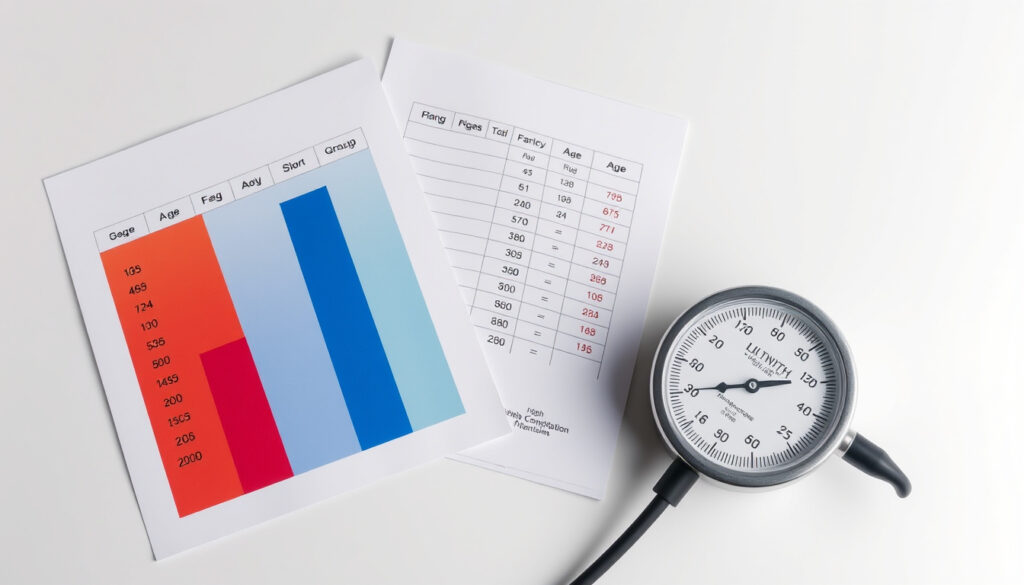
Blood pressure naturally shifts as the body ages, making it essential to understand which readings reflect good health at every stage of life. Medical organizations worldwide have established age-specific benchmarks that help clinicians and individuals assess cardiovascular risk more accurately. This guide compiles current guidelines and research findings into a comprehensive resource for readers of all ages.
The relationship between aging and blood pressure involves complex physiological changes, including arterial stiffening and hormonal shifts. While universal thresholds apply to adults, pediatric values require more nuanced interpretation based on growth percentiles. Below, readers will find detailed charts, practical insights, and evidence-based guidance for maintaining healthy blood pressure throughout life.
What Is Normal Blood Pressure by Age?
The American Heart Association (AHA) and American College of Cardiology (ACC) have maintained consistent blood pressure classifications since their landmark 2017 update, with no major changes through 2025. These categories apply universally to adults aged 18 and older, regardless of demographic factors. Understanding where an individual falls within these ranges provides the foundation for cardiovascular health assessment.
Normal Range
Elevated Range
Stage 1 Hypertension
Stage 2 Hypertension
Key Facts About Blood Pressure by Age
- Blood pressure readings consist of two numbers: systolic pressure (the top number, measuring artery pressure when the heart beats) and diastolic pressure (the bottom number, measuring pressure between beats).
- Normal blood pressure for adults remains below 120/80 mm Hg regardless of age, according to the AHA guidelines.
- Pediatric blood pressure values are significantly lower than adult values and are interpreted using age, sex, and height percentiles rather than fixed numbers.
- Women typically have lower average blood pressure than men in younger years, but this pattern often reverses after age 60 due to menopause and hormonal changes.
- Seniors face elevated cardiovascular risk, with the AHA recommending a target below 130/80 mm Hg for adults over 65 years old.
- Obesity and excess weight raise blood pressure across all age groups by contributing to arterial stiffening.
- Home monitoring with validated devices can help individuals track trends over time, though clinical measurements remain important for diagnosis.
| Age Group | Normal Systolic (mm Hg) | Normal Diastolic (mm Hg) | Average Reading |
|---|---|---|---|
| School-aged (5–12 years) | 97–112 | 57–71 | Approximately 102/64 |
| Adolescents (13–19 years) | 112–128 | 66–80 | Approximately 120/75 |
| Adults (20–39 years) | Below 120 | Below 80 | 115–119 / 70–75 |
| Adults (40–59 years) | Below 120 | Below 80 | 120–124 / 74–80 |
| Adults (60+ years) | Below 120 | Below 80 | 125–133 / 68–69 |
Average blood pressure naturally increases with age even among healthy individuals. A reading that would concern a physician in a 25-year-old may fall within normal range for a 70-year-old. However, the target for all adults remains below 120/80 mm Hg, with treatment thresholds adjusted based on overall cardiovascular risk.
Blood Pressure Chart by Age and Gender
Research consistently shows measurable differences in blood pressure patterns between men and women, though these variations shift across the lifespan. Young men often present with slightly higher readings than women of the same age, a pattern that gradually reverses after middle age. The hormonal changes associated with menopause typically cause women’s blood pressure to rise, frequently exceeding male averages after age 60.
Average Blood Pressure by Age and Sex
| Age Range | Female Average (mm Hg) | Male Average (mm Hg) | Notable Pattern |
|---|---|---|---|
| 18–39 years | 110/68 | 119/70 | Men typically higher |
| 40–59 years | 122/74 | 124/77 | Values begin converging |
| 60+ years | 139/68 | 133/69 | Women often higher |
These patterns reflect hormonal influences throughout life, including the protective effects of estrogen in premenopausal women and the impact of estrogen decline during menopause. Healthcare providers consider these gender-specific trajectories when evaluating individual cardiovascular risk, though treatment decisions ultimately depend on overall health profile rather than gender alone.
Pediatric Blood Pressure by Age
Children require fundamentally different blood pressure assessment compared to adults. Rather than fixed numbers, pediatric values are determined using standardized tables that factor in age, biological sex, and height percentile. This approach accounts for the wide variation in body size and developmental stage among children of the same chronological age.
| Pediatric Age Group | Systolic Range (mm Hg) | Diastolic Range (mm Hg) |
|---|---|---|
| Newborns (up to 1 month) | 60–90 | 20–60 |
| Infants (1–12 months) | 65–105 | 35–66 |
| Toddlers (1–3 years) | 95–105 | 53–66 |
| Preschoolers (3–5 years) | 95–110 | 56–70 |
| School-aged (5–12 years) | 97–112 | 57–71 |
| Adolescents (10–19 years) | 112–128 | 66–80 |
Low blood pressure thresholds in children differ significantly from adults. Hypotension in newborns may be indicated by readings below 45/30 mm Hg, while infants with readings below 65/35 mm Hg may require evaluation. Parents should consult pediatric guidelines and healthcare providers rather than applying adult standards to young children.
What Counts as High or Low Blood Pressure by Age?
The 2017 ACC/AHA guideline update lowered the threshold for hypertension diagnosis from 140/90 to 130/80 mm Hg, bringing approximately 46% of American adults into hypertensive categories. This change reflected research demonstrating cardiovascular benefit from treating blood pressure at lower levels. While some debate exists about aggressive treatment in older adults, the AHA maintains the 130/80 mm Hg standard across all adult age groups.
Understanding Hypertension Thresholds
High blood pressure develops when arterial walls experience persistent elevated pressure, typically due to narrowing or stiffening of blood vessels. This condition increases risk for heart attack, stroke, kidney disease, and other cardiovascular complications. The progression typically follows a predictable pathway from elevated readings to full hypertension.
- Normal: Systolic below 120 mm Hg and diastolic below 80 mm Hg
- Elevated: Systolic 120–129 mm Hg and diastolic below 80 mm Hg
- Stage 1 Hypertension: Systolic 130–139 mm Hg or diastolic 80–89 mm Hg
- Stage 2 Hypertension: Systolic 140+ mm Hg or diastolic 90+ mm Hg
- Hypertensive Crisis: Systolic above 180 mm Hg and/or diastolic above 120 mm Hg (seek immediate medical attention)
Low blood pressure, while less commonly discussed, can also pose health concerns. Hypotension generally refers to readings below 90/60 mm Hg, though symptoms vary significantly among individuals. Dizziness, fainting, fatigue, and blurred vision may accompany low readings, particularly when blood pressure drops suddenly or falls below critical thresholds.
Risk Factors That Vary by Age
Several factors influence blood pressure differently across age groups. Excess weight and obesity contribute to arterial stiffening and elevated readings in both children and adults. Sedentary lifestyle, high sodium intake, excessive alcohol consumption, and chronic stress compound risk across all demographics. Family history of hypertension, diabetes, kidney disease, and other conditions add additional layers of risk that healthcare providers consider when developing personalized treatment plans.
Hypertensive crisis requires immediate medical evaluation. Readings exceeding 180/120 mm Hg, particularly when accompanied by chest pain, shortness of breath, back pain, numbness, weakness, or difficulty speaking, may indicate organ damage requiring emergency intervention. Do not delay seeking care if experiencing these symptoms alongside severely elevated blood pressure readings.
Average Blood Pressure Ranges by Age Group
Population studies reveal clear trends in average blood pressure across different life stages. These averages provide useful reference points for understanding typical values within age cohorts, though individual health circumstances may warrant different targets. The Centers for Disease Control and Prevention emphasizes that population-level data supports treating blood pressure below 130/80 mm Hg for most adults to reduce cardiovascular events.
Adult Blood Pressure Patterns
Among adults aged 18 to 39, average readings typically fall around 115/75 mm Hg. Young women generally average 110/68 mm Hg while young men average 119/70 mm Hg, reflecting the earlier-noted gender divergence during early adulthood. Blood pressure generally increases gradually through middle age, with averages reaching approximately 120/80 mm Hg by the fifth and sixth decades of life.
The 60-and-older population shows continued elevation in average systolic readings, though diastolic values often stabilize or decline slightly. Women in this age group frequently demonstrate higher systolic averages than men, contrasting sharply with patterns seen in younger cohorts. These shifts underscore the importance of age-appropriate cardiovascular risk assessment rather than applying uniform standards without consideration for demographic factors.
Blood Pressure and Physical Development
In children and adolescents, blood pressure correlates directly with height and weight. Pediatric hypertension is defined as systolic or diastolic readings at or above the 95th percentile for age, sex, and height on standardized growth charts. This percentile-based approach recognizes that a blood pressure reading appropriate for a tall, developmentally advanced 10-year-old may indicate hypertension in a smaller peer of the same age.
The National Heart, Lung, and Blood Institute provides detailed pediatric blood pressure tables that healthcare providers use to assess children’s readings in context. Parents concerned about their child’s blood pressure should consult these resources and work with pediatric healthcare teams to determine whether further evaluation is warranted.
How Blood Pressure Guidelines Have Evolved
Blood pressure standards have changed substantially over the past five decades, reflecting accumulating research on cardiovascular risk. Understanding this evolution helps contextualize current recommendations and highlights the ongoing nature of medical science in refining prevention strategies.
- 1977: The first Joint National Committee (JNC I) report established initial blood pressure classification systems, defining hypertension as 160/95 mm Hg or higher.
- 1993: JNC V lowered hypertension thresholds to 140/90 mm Hg, broadening the population considered for treatment.
- 2003: JNC VII introduced the category of “prehypertension” (120-139/80-89 mm Hg) to identify those at risk before developing full hypertension.
- 2017: ACC/AHA guidelines significantly revised classifications, lowering hypertension diagnosis to 130/80 mm Hg and introducing new staging categories.
- 2024–2025: Major organizations have maintained the 2017 framework while refining implementation guidance for specific populations including seniors and those with diabetes.
Medical sources confirm no major changes to blood pressure thresholds have occurred since the 2017 update through the current period. Patients should feel confident that current guidelines represent the consensus position of major cardiovascular organizations based on extensive clinical trial data.
What We Know and What Remains Uncertain
While blood pressure science has advanced significantly, certain aspects remain subjects of ongoing research and clinical debate. Distinguishing established facts from areas of uncertainty helps readers understand the current state of knowledge and discuss their individual situations knowledgeably with healthcare providers.
Well-Established Information
- AHA/ACC categories define hypertension as 130/80 mm Hg or higher for adults
- Blood pressure naturally increases with age in most populations
- Pediatric values require percentile-based assessment
- Gender differences in blood pressure shift after age 60
- Obesity and sedentary lifestyle raise blood pressure
- Home monitoring with validated devices improves tracking accuracy
Areas of Ongoing Research
- Optimal blood pressure targets for adults over 80 years old
- Specific treatment thresholds for patients with multiple comorbidities
- Role of ethnicity and genetic factors in blood pressure assessment
- Long-term effects of aggressive treatment in very elderly patients
- Precision medicine approaches to blood pressure management
Patients with diabetes, chronic kidney disease, or other significant health conditions should work closely with their healthcare teams to establish personalized blood pressure targets. The University of Texas Southwestern Medical Center notes that individualized goals may differ from general population recommendations based on overall health profile and risk stratification.
Factors That Influence Blood Pressure Across the Lifespan
Blood pressure reflects the interaction of numerous biological, behavioral, and environmental factors. While some influences like age and genetics cannot be modified, understanding controllable factors empowers individuals to take proactive steps toward healthier readings. Research consistently demonstrates that lifestyle modifications can meaningfully impact blood pressure at any age.
Modifiable Risk Factors
Excess body weight represents one of the most significant modifiable contributors to elevated blood pressure. Fat accumulation, particularly around the midsection, increases cardiac workload and promotes arterial stiffness. Studies show that modest weight reduction often produces meaningful blood pressure improvements, with some individuals able to reduce or eliminate medication needs through weight management alone.
Physical activity strengthens the cardiovascular system and helps maintain arterial flexibility. Regular aerobic exercise, such as brisk walking, cycling, or swimming, has demonstrated consistent blood pressure-lowering effects across age groups. The Million Hearts initiative highlights physical activity as a cornerstone of hypertension prevention and management.
Home Monitoring Best Practices
Accurate home blood pressure monitoring requires proper technique and validated equipment. The American Heart Association and Mayo Clinic recommend using upper-arm cuffs rather than wrist or finger devices for most accurate readings. Before measuring, individuals should sit quietly for five minutes with feet flat on the floor and arm supported at heart level.
- Take two to three readings separated by one-minute intervals and calculate the average
- Avoid caffeine, tobacco, and exercise for at least 30 minutes before measuring
- Monitor twice daily, typically morning and evening, for comprehensive trend data
- Record readings with context, including time, recent activities, and emotional state
- Share trends with healthcare providers during appointments rather than relying on single readings
- Have device accuracy validated periodically against clinical measurements
Consistent monitoring provides more valuable information than sporadic checks. Individuals with elevated readings or hypertension diagnosis benefit from establishing regular monitoring routines and maintaining written or digital logs to share with their healthcare team during appointments.
What Experts Say About Blood Pressure Management
Leading medical institutions continue to emphasize blood pressure control as a critical component of cardiovascular health. The American Heart Association states that maintaining blood pressure below 120/80 mm Hg offers the best protection against heart disease and stroke, the leading causes of death worldwide.
High blood pressure is called the silent killer because it usually has no warning signs or symptoms, and many people do not know they have it. That is why it is important to have your blood pressure checked regularly by a healthcare professional.
— American Heart Association
The Mayo Clinic emphasizes that accurate measurement technique significantly impacts clinical decision-making. Their experts note that both home monitoring and clinical measurements have inherent limitations, and the best approach combines data from multiple sources with professional interpretation.
Blood pressure monitors used at home are electronically calibrated and may be a good option for people who need to monitor their blood pressure on a regular basis.
— Mayo Clinic
Summary and Practical Takeaways
Blood pressure naturally varies with age, yet the target for optimal cardiovascular health remains consistent: readings below 120/80 mm Hg for most adults. The 2017 ACC/AHA guidelines established current treatment thresholds and have remained stable through 2025, providing a clear framework for assessment. Gender differences in blood pressure shift across the lifespan, with women often showing higher readings than men after age 60.
Pediatric blood pressure assessment requires percentile-based interpretation that accounts for age, sex, and height, making direct comparison with adult standards inappropriate. Adults over 65 face elevated cardiovascular risk and benefit from careful monitoring and proactive management. While many factors influencing blood pressure cannot be changed, lifestyle modifications including weight management, regular physical activity, and stress reduction offer meaningful benefits at any age.
For readers interested in complementary approaches to cardiovascular wellness, exploring mindfulness practices may provide additional tools for stress management, which can positively influence blood pressure over time. Those considering home aquarium setups as a relaxation strategy may find guidance on beginner-friendly species helpful for creating calming home environments.
Frequently Asked Questions
What is normal blood pressure for adults?
Normal blood pressure for adults is below 120/80 mm Hg according to AHA/ACC guidelines. Readings consistently at 130/80 mm Hg or higher indicate hypertension requiring intervention. These thresholds apply to all adults regardless of age or gender.
What should blood pressure be at age 70?
While blood pressure naturally increases with age, the target for adults over 65 remains below 130/80 mm Hg per AHA guidelines. Some sources suggest slightly higher acceptable thresholds for seniors, but cardiovascular organizations emphasize that most elderly individuals benefit from blood pressure control at the same levels recommended for younger adults.
Is 120/80 normal blood pressure?
Yes, 120/80 mm Hg falls within the normal range and represents the upper boundary of healthy blood pressure. Readings below this level indicate optimal cardiovascular protection, while readings at or above 120/80 mm Hg may warrant lifestyle modifications or medical intervention depending on overall risk profile.
What is the difference between systolic and diastolic pressure?
Systolic pressure (the top number) measures artery pressure when the heart contracts and pumps blood outward. Diastolic pressure (the bottom number) measures the resting pressure in arteries between heartbeats. Both values are important for assessing cardiovascular health and determining appropriate treatment strategies.
How often should I check my blood pressure?
Adults with normal blood pressure and no risk factors should have readings checked at least annually during routine healthcare visits. Those with elevated readings, hypertension diagnosis, or cardiovascular risk factors should monitor more frequently, typically twice daily at home, following proper technique guidelines.
Does blood pressure vary by gender?
Yes, blood pressure patterns differ between men and women across the lifespan. Young men typically have higher readings than women of the same age, but this pattern reverses after age 60 when women often show higher average systolic values due to hormonal changes associated with menopause.
How does height affect blood pressure readings in children?
In pediatric populations, blood pressure interpretation must account for height in addition to age and sex. Healthcare providers use percentile-based charts that consider all three factors, with hypertension defined as readings at or above the 95th percentile for the child’s specific demographic profile.
When should I seek emergency care for blood pressure?
Seek immediate medical attention for readings exceeding 180/120 mm Hg, particularly if accompanied by symptoms such as chest pain, shortness of breath, back pain, numbness, weakness, difficulty speaking, or severe headache. These may indicate hypertensive crisis or other serious conditions requiring emergency intervention.