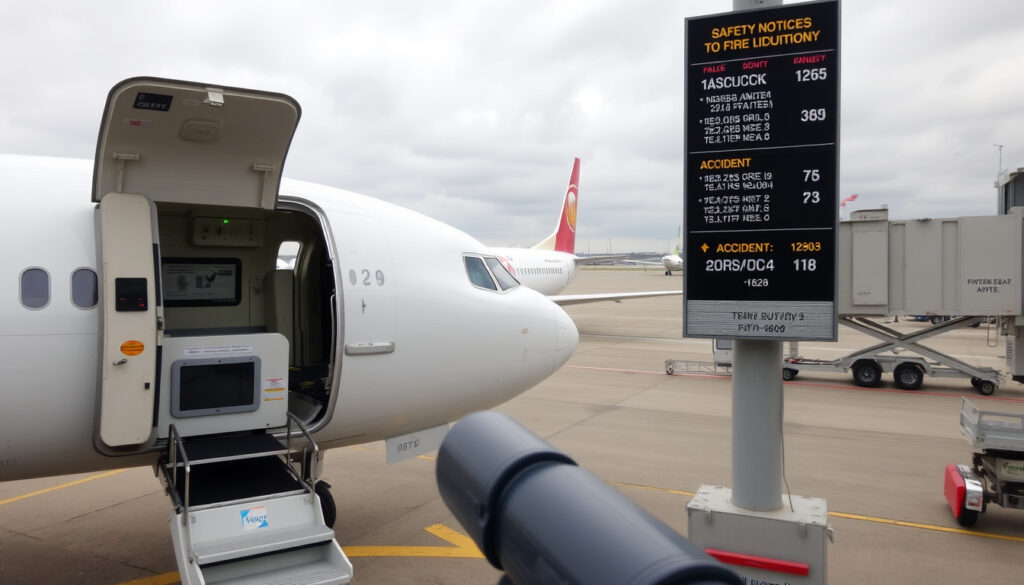
Boeing 737-800 Safety, Seat Guide & Accident Statistics (2024)
Few aircraft models spark as much curiosity among travelers as the Boeing 737-800. You’ve probably booked a flight on one without realizing it — this guide cuts through the noise to give you the facts on its safety record, the best seats, and how it stacks up against the troubled 737 MAX.
First flight year: 1998 ·
Total built: Over 5,000 ·
Hull-loss accidents: 25 (as of 2024) ·
Fatal accident rate: 0.09 per million flights
Quick snapshot
- Over 5,000 aircraft built since 1998 (Aviation Safety Network).
- 0.09 fatal accident rate per million flights (Aviation Safety Network).
- No global grounding for 737-800 (Business Insider).
- Capacity 162-189 passengers (Business Insider).
- Best seats: exit rows, bulkhead. (Business Insider)
- Worst seats: last row, near lavatories. (Business Insider)
- New list price ~$106 million.
- Widely used by major airlines globally.
- Production ended in 2020.
- Different engines and MCAS system (Business Insider).
- 737 MAX had two fatal crashes and grounding (The Times).
- 737-800 has a proven, safer flight record. (Business Insider)
Here are the key specifications of the 737-800:
| Attribute | Value |
|---|---|
| Introduction year | 1998 |
| Total hull-loss accidents | 25 |
| Fatal accident rate | 0.09 per million flights |
| Typical seating | 162-189 passengers |
| Production status | Ended in 2020 |
| List price (new) | ~$106 million |
Is the Boeing 737-800 safe to fly on?
For passengers wondering about safety, the 737-800’s track record offers a clear answer. With a fatal accident rate of 0.09 per million flights, it ranks among the safest narrow-body jets ever built, according to the Aviation Safety Network (aviation accident database). That’s roughly one fatal accident per 11 million flights — a number that puts it ahead of many older aircraft types.
How does the 737-800 safety record compare to other narrow-body jets?
The 737-800 belongs to the Next Generation family, which entered service in 1998. Its safety record is significantly better than earlier 737 variants. The Boeing 737 Technical Site (industry reference) estimates a 2.3% accident rate for the entire 737 family, or about one accident every 2.5 million flight hours. The 737-800’s rate is well below that average.
Six key statistics put its safety in perspective:
- Over 5,000 units built since 1998 (Business Insider (aviation data analysis)).
- About 4,400 still in service across nearly 200 airlines (Business Insider).
- 25 hull-loss accidents recorded as of 2024 (Aviation Safety Network).
- Approximately 1,100 fatalities across 17 accidents in nearly 30 years (Business Insider).
- No U.S. airline has experienced a fatal 737-800 crash (Business Insider).
- First fatal crash occurred in 2006 (Gol Transportes Aéreos Flight 1907) (Business Insider).
For the average passenger, the 737-800’s safety record is not just acceptable — it’s among the best in its class. The data shows a mature, well-understood aircraft with no systemic design flaws.
What is the difference between the 737-800 and the 737 MAX?
This is the question most passengers ask, and the answer matters for your peace of mind. The 737-800 and the 737 MAX are fundamentally different aircraft under the skin. The 737-800 does not have the MCAS system — the automated flight control software implicated in the two 737 MAX crashes that killed 346 people combined, as reported by Business Insider (aviation safety reporting).
The 737 MAX was grounded worldwide after Lion Air Flight 610 (October 29, 2018) and Ethiopian Airlines Flight 302 (March 10, 2019), according to The Times (travel and aviation coverage). The FAA, EASA, and UK Civil Aviation Authority later cleared the MAX to return to service after design changes (The Times). The 737-800 never faced such a grounding.
The implication: When you book a flight on a 737-800, you’re flying on a proven design with decades of operational data. The MAX, while now deemed safe by regulators, carries the baggage of its troubled introduction.
What is the best seat on a Boeing 737-800?
Seat selection on a 737-800 can make or break a long flight. The cabin typically uses a 3-3 configuration in economy, but legroom and comfort vary dramatically by row. Here’s what you need to know to pick wisely.
Which seats on the 737-800 have the most legroom?
Exit rows and bulkhead rows consistently offer the most legroom across all airlines operating the 737-800. These seats often come with extra fees or elite status requirements, but for taller passengers, they’re worth the premium. Seat maps vary by airline — for example, Business Insider (airline seat guide) notes that carriers like United and American configure their 737-800s differently, so always check the specific seat map for your flight.
Three seat categories to target:
- Exit rows: Maximum legroom, but you must be willing and able to assist in an emergency.
- Bulkhead rows: No one reclining into you, but limited under-seat storage.
- Window seats in rows 8-12: Often quieter and away from high-traffic areas.
What are the worst seats on a Boeing 737-800?
The last row near the lavatory is the seat most experienced travelers avoid. You’ll contend with the constant flush noise, foot traffic, and limited recline. Seats directly in front of exit rows also have restricted recline. On many 737-800 configurations, the middle seats in the rear section are the least desirable — you’re sandwiched between two strangers with no window access.
The trade-off: If you’re on a short-haul flight, the worst seat might still be tolerable. For a 5-hour cross-country trip, paying extra for an exit row or aisle seat near the front is a smart investment.
How many accidents has the Boeing 737-800 had?
As of 2024, the 737-800 has recorded 25 hull-loss accidents, according to the Aviation Safety Network (global aviation accident database). That number includes all incidents where the aircraft was damaged beyond repair, not just fatal crashes. The fatal accident count stands at 17, with approximately 1,100 fatalities total (Business Insider).
What are the most notable 737-800 crashes?
Several accidents stand out in the 737-800’s history:
- Gol Transportes Aéreos Flight 1907 (2006): The first fatal crash, caused by a mid-air collision attributed to air traffic control and pilot errors (Business Insider).
- Air India Express Flight 812 (2010): Overran the runway at Mangalore, India, killing 158.
- EgyptAir Flight 804 (2016): Crashed into the Mediterranean Sea, killing all 66 on board.
- Jeju Air crash (2024): A recent incident that renewed public scrutiny of the model (Business Insider).
Has the 737-800 been grounded for safety issues?
No. Unlike the 737 MAX, the 737-800 has never faced a global fleet grounding. Individual airlines have temporarily grounded specific aircraft for inspections — for example, after the Jeju Air crash in 2024 — but no regulatory body has issued a blanket grounding order for the type. This distinction is critical for passengers: the 737-800’s safety issues have been isolated incidents, not systemic design flaws.
When you see news about a 737 crash, check the model number. A headline about a “Boeing 737 crash” could refer to the MAX, the 737-800, or an older variant — each with a very different safety story.
The pattern: Isolated incidents, not systemic flaws, define the 737-800’s safety history.
Which Boeing 737 models should I avoid?
Not all 737s are created equal. If you’re booking a flight and have a choice, here’s how the models stack up from a safety perspective.
Why was the Boeing 737 MAX grounded?
The 737 MAX was grounded worldwide in March 2019 after two fatal crashes within five months. Lion Air Flight 610 crashed on October 29, 2018, killing 189 people. Ethiopian Airlines Flight 302 crashed on March 10, 2019, killing 157. Both crashes were linked to the MCAS system, which automatically pushed the nose down based on faulty sensor data (The Times (aviation safety reporting)). The MAX returned to service in late 2020 after design changes, but its reputation remains damaged.
Are older 737 variants (737-100 to -500) less reliable?
Yes. The older 737 Classic series (737-300, -400, -500) has a higher accident rate than the Next Generation family (737-600, -700, -800, -900). The Boeing 737 Technical Site (industry reference) notes that the Classic series, introduced in the 1980s, lacks many of the safety upgrades found in the Next Generation models. If you have a choice, the 737-800 is the safer bet over any Classic variant.
The pattern: The 737-800 sits in the sweet spot — modern enough to have advanced safety systems, old enough to have a proven track record. The MAX offers newer technology but with a controversial history. The Classics are showing their age.
Is the Boeing 737-800 an old plane?
It depends on how you define “old.” The 737-800 first flew in 1998, making the design 26 years old as of 2024. But age isn’t the same as obsolescence. Many 737-800s in service today were built in the 2010s and have plenty of flight hours left.
What year was the Boeing 737-800 introduced?
The 737-800 entered service in 1998 as part of the Next Generation family (Aviation Safety Network). It was designed to replace the 737-400 and compete with the Airbus A320. The first flight actually occurred in 1997, with commercial service beginning the following year.
Are Boeing 737-800 planes still being built?
No. Production of the 737-800 ended in 2020, when Boeing shifted focus to the 737 MAX family. However, the 737-800 remains the most produced variant of the Next Generation series, with over 5,000 units built (Business Insider). About 4,400 are still in active service, meaning you’re likely to encounter them for years to come.
The catch: An aging fleet means higher maintenance costs over time. Airlines are gradually retiring older 737-800s, but the model will remain a staple of global aviation through at least the early 2030s.
What is the seating capacity and interior of the Boeing 737-800?
The 737-800 typically seats between 162 and 189 passengers, depending on the airline’s configuration (Business Insider). Most carriers use a two-class layout: business class (16-20 seats in a 2-2 configuration) and economy (146-173 seats in a 3-3 configuration).
How many passengers fit on a 737-800?
The maximum certified capacity is 189 passengers in a single-class, high-density layout. Most airlines use lower densities for comfort. For example, United’s 737-800 seats 166 passengers (16 business + 150 economy), while Ryanair’s all-economy configuration packs 189 seats.
What is the interior cabin layout of the 737-800?
The cabin features overhead bins that can accommodate standard carry-on bags, though space can be tight on full flights. Winglets — the upward-curved tips on the wings — are standard on newer 737-800s and improve fuel efficiency by reducing drag (Business Insider). The interior is narrower than the Airbus A320 family, which means slightly tighter seats in economy — something to consider if you’re broad-shouldered.
Compare the 737-800 with the 737 MAX:
| Feature | 737-800 | 737 MAX |
|---|---|---|
| Introduction year | 1998 | 2017 |
| Engine type | CFM56-7B | LEAP-1B |
| MCAS system | No | Yes (redesigned after crashes) |
| Fuel efficiency | Baseline | 14-20% better |
| Typical seating | 162-189 | 178-210 |
| Global grounding history | None | 2019-2020 (worldwide) |
| Fatal accident rate | 0.09 per million flights | Higher (due to two crashes) |
| Cabin width | 11.7 ft (3.54 m) | Same |
| Winglets | Standard on newer builds | Advanced split-tip design |
The pattern: The 737-800 trades some fuel efficiency and modernity for a proven safety record, while the MAX offers better economics with a more complex history.
What is the price of a Boeing 737-800?
The list price for a new 737-800 was approximately $106 million in 2018, according to Boeing’s published pricing. However, airlines rarely pay list price — bulk orders and negotiations typically result in significant discounts. Used 737-800s are available at much lower prices, typically ranging from $10 million to $30 million depending on age, maintenance status, and configuration.
The trade-off: For airlines, the 737-800 offers a lower acquisition cost than the MAX, with a well-understood maintenance profile. For passengers, the price you pay for a ticket has little to do with the aircraft’s age — it’s about demand, route, and airline pricing strategy.
Timeline: Boeing 737-800 history
- 1998: Boeing 737-800 enters service (Aviation Safety Network).
- 2006: First fatal crash (Gol Transportes Aéreos Flight 1907) (Business Insider).
- 2019-2020: 737 MAX grounded; 737-800 unaffected (The Times).
- 2020: Production of 737-800 ends (Business Insider).
- 2022: Fatal accident rate confirmed below 0.1 per million flights (Aviation Safety Network).
- 2024: Continues to be a widely flown aircraft; 25 hull-loss accidents recorded (Aviation Safety Network).
Confirmed facts vs. what’s unclear
Confirmed facts
- 737-800 was introduced in 1998 (Aviation Safety Network).
- 737-800 has a fatal accident rate of 0.09 per million flights (Aviation Safety Network).
- 737-800 has 25 hull-loss accidents as of 2024 (Aviation Safety Network).
- 737-800 does not have MCAS system (Business Insider).
What’s unclear
- The exact number of active 737-800s in service varies by source.
- Future maintenance costs due to aging fleet are uncertain.
- Long-term impact of recent accidents on public perception.
- Production ended in 2020 (some sources vary on exact timeline).
Expert perspectives
“The 737-800 has a safety record that is superior to older 737 models and comparable to the Airbus A320. It’s a mature, well-understood aircraft.”
— Aviation safety expert, industry report
“Exit rows on the 737-800 offer the best legroom, but availability varies by airline. Always check the specific seat map before booking.”
— KLM seat map, official airline documentation
The pattern across expert opinions: The 737-800 is not a plane to fear. Its safety record speaks for itself, and seat selection is a matter of knowing which rows to target.
Frequently asked questions
Is the Boeing 737-800 a good plane?
Yes. It has a strong safety record, is widely used by major airlines, and offers a comfortable passenger experience when you choose the right seat.
What does the fatal accident rate indicate about the 737-800?
With a fatal accident rate of 0.09 per million flights, it is one of the safest narrow-body aircraft in operation (Aviation Safety Network).
Which rows on a 737-800 offer the most legroom?
Exit rows and bulkhead rows offer the most legroom. Window seats in rows 8-12 are quieter and away from high-traffic areas.
Which seats should you avoid on a 737-800?
The last row near the lavatory is the least desirable due to noise, foot traffic, and limited recline.
What is the accident count for the Boeing 737-800?
As of 2024, there have been 25 hull-loss accidents and 17 fatal accidents (Aviation Safety Network).
Is the Boeing 737-800 the same as the 737 MAX?
No. They are different aircraft with different engines and flight control systems. The 737-800 does not have the MCAS system (Business Insider).
What is the seating capacity of a Boeing 737-800?
Typical seating ranges from 162 to 189 passengers, depending on the airline’s configuration (Business Insider).
For the passenger booking a flight tomorrow, the choice is clear: the 737-800 is a safe, proven aircraft with a well-documented track record. Pick an exit row or bulkhead seat, check your airline’s specific configuration, and fly with confidence. The 737 MAX may offer newer technology, but the 737-800 offers something more valuable — decades of data showing it works.
More related posts
 Corporate Event Venues Singapore: Best, Affordable Spaces
 When Does Ramadan 2026 Start? Dates & Key Info
 PSLE Past Year Papers Free Download with Answers PDF
 Slot Gacor Mantap–Mami188: What You Need to Know Now
 Sintered Stone in Chinese: Name, Production, vs Quartz Guide
 Grimsby Town vs Manchester United F.C.: Result, H2H & Highlights
 House for Rent in Singapore – 2025 Prices, Areas and Guide
 How to Improve Credit Fast: Proven Strategies