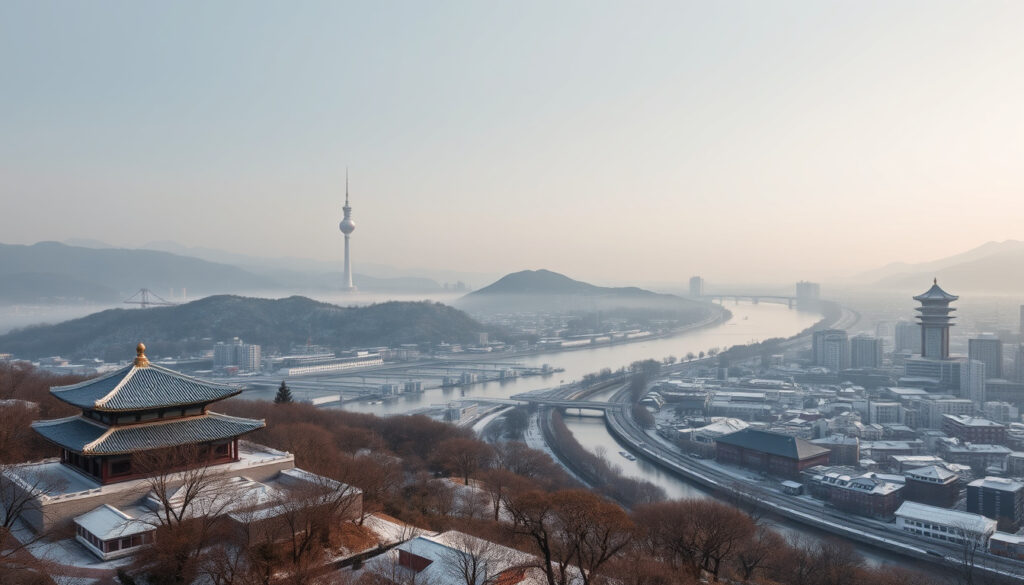
Places to Go in Seoul: Top Attractions, Free Spots & Winter Guide
You’ve probably heard that Seoul is a city of neon lights and ancient palaces, but the real magic is in how those two worlds collide. This guide cuts through the noise, pointing you to the iconic landmarks, hidden neighborhoods, and budget-friendly spots that make the South Korean capital worth every minute of your trip and by the end you’ll have a clear itinerary tailored to your interests.
Population of Seoul: 9.7 million (2020 census) ·
Number of major royal palaces: 5 (Gyeongbokgung, Changdeokgung, Changgyeonggung, Deoksugung, Gyeonghuigung) ·
UNESCO World Heritage sites in Seoul: 2 (Changdeokgung Palace Complex, Jongmyo Shrine) ·
Average January temperature: -2°C (28°F) ·
Number of subway lines: 23
Quick snapshot
- Gyeongbokgung Palace is closed on Tuesdays (Royal Palaces and Tombs Center (official palace management)).
- N Seoul Tower is open daily from 10:00 to 23:00 (Visit Seoul (Seoul tourism board)).
- Cheonggyecheon Stream is free and open 24/7 (Visit Seoul (Seoul tourism board)).
- Exact cherry blossom peak dates vary each year (Visit Seoul (Seoul tourism board)).
- Some market stall hours may change seasonally. (Visit Seoul (Seoul tourism board))
- Seoul Plaza Ice Skating Rink operates December–February (Seoul Metropolitan Government (city administration)).
- Cheonggyecheon hosts winter light festivals in December (Visit Seoul (Seoul tourism board)).
- Spring cherry blossom forecasts are released in March (Visit Seoul (Seoul tourism board)).
- Summer palace night tours run June–August (Royal Palaces and Tombs Center (official palace management)).
Five key facts frame your visit to Seoul, from its size to its subway reach.
| Fact | Value |
|---|---|
| Population | 9.7 million (2020 census) |
| UNESCO World Heritage sites | 2 (Changdeokgung, Jongmyo Shrine) |
| Average January temperature | -2°C (28°F) |
| Number of subway lines | 23 |
| Official tourism website | visitseoul.net |
What are the top tourist attractions in Seoul?
Gyeongbokgung Palace
- Gyeongbokgung Palace is the largest of the five grand palaces and offers free guided tours (Royal Palaces and Tombs Center (official palace management)).
- The palace grounds are free to enter on the last Wednesday of each month (Culture Day) (Royal Palaces and Tombs Center (official palace management)).
Gyeongbokgung anchors Seoul’s royal heritage. Visitors in hanbok get free admission year-round, a policy that makes the palace one of the most cost-effective cultural experiences in the city.
Bukchon Hanok Village
- Bukchon Hanok Village is a residential area with traditional Korean houses, open to the public (Visit Seoul (Seoul tourism board)).
The hilly streets offer photo-worthy views of tiled roofs and the modern skyline beyond. Because it’s a living neighborhood, visitors are asked to keep noise down after dark.
N Seoul Tower
- N Seoul Tower provides panoramic views of the city and is a popular spot for couples.
Reaching the top by cable car costs around 14,000 won for a round trip, but the observation deck itself starts at 12,000 won. Sunset visits are especially crowded—arrive by 16:00 to avoid long queues.
Myeongdong Shopping District
- Myeongdong is a major shopping and entertainment district.
Myeongdong’s department stores and street food stalls make it a daytime and nighttime hub. The district comes alive after 18:00 when pop-up cosmetics vendors and tteokbokki carts fill the pedestrian alleys.
Gyeongbokgung’s free guided tours are popular; English-language tours start at 11:00 and 13:30, but spaces fill quickly. Arrive 30 minutes early to secure a spot.
The pattern: balancing structured tours with spontaneous exploration gives the richest experience of central Seoul.
What are unique places to go in Seoul?
Ihwa Mural Village
- Ihwa Mural Village is a hillside neighborhood covered in street art and murals.
Once a declining district, Ihwa was revived through the “Art in City” project. Many murals have faded due to weather and tourism, but the remaining works still create an eclectic maze worth an hour’s exploration.
Seoul Forest
- Seoul Forest is a large urban park with a deer enclosure and butterfly garden (Seoul Parks (city parks authority)).
Spread across 1.16 million square meters, Seoul Forest offers a quieter alternative to Namsan Park. The deer enclosure is free to enter, and the park’s cultural plaza hosts weekend performances during spring and autumn.
Dongdaemun Design Plaza (DDP)
- Dongdaemun Design Plaza is a futuristic cultural complex designed by Zaha Hadid.
DDP’s fluid aluminum exterior looks especially dramatic at night when illuminated. Inside, the building houses a design museum, exhibition halls, and a rooftop garden that stays open late.
Gwangjang Market
- Gwangjang Market is one of the oldest traditional markets, known for bindaetteok (mung bean pancakes) (Visit Seoul (Seoul tourism board)).
Established in 1905, Gwangjang Market retains its original textile stalls and a vast food alley. The market is free to enter, and a serving of bindaetteok costs about 4,000 won—one of Seoul’s best value meals.
Seoul’s unique spots reveal a city that experiments with public art and adaptive reuse. For travelers who’ve seen the palace circuit, these neighborhoods offer a grittier, more creative side of Seoul that guidebooks often skip.
What this means: exploring these areas adds a layer of authenticity that transforms a standard itinerary into a personal discovery.
What are the best places to visit in Seoul for free?
Cheonggyecheon Stream
- Cheonggyecheon is a 10.9 km long public recreation stream in downtown Seoul.
Restored in 2005, the stream runs right through the financial district. It’s open 24/7 and free—a perfect spot for a low-key afternoon walk or evening light display view during the Seoul Lantern Festival in December.
Gyeongbokgung Palace (free on certain days)
- Gyeongbokgung Palace offers free admission on the last Wednesday of each month (Culture Day) (Royal Palaces and Tombs Center (official palace management)).
Also free for children under 18 and seniors over 65. If you time your visit right, you can tour the main palace without spending a penny.
Namsan Park
- Namsan Park has free hiking trails and views of N Seoul Tower (Seoul Parks (city parks authority)).
Several trails lead up Namsan Mountain. The Namsan Circular Road is paved and well-lit, making it accessible even in winter. The cable car to the tower costs extra, but the park itself costs nothing.
War Memorial of Korea
- The War Memorial of Korea is a free museum with outdoor exhibits (War Memorial of Korea (national war museum)).
Indoor galleries cover Korean conflicts from the Three Kingdoms period to the Korean War. Outside, the memorial grounds display aircraft, tanks, and a moving “Brothers” sculpture.
The implication: a well-planned free itinerary lets you experience Seoul’s core without compromising depth.
What are the best places to visit in Seoul during winter?
Seoul Plaza Ice Skating Rink
- Seoul Plaza Ice Skating Rink operates from December to February, free with rental fees (Seoul Metropolitan Government (city administration)).
Located in front of City Hall, the rink costs just 1,000 won for an hour of skating, including skate rental. It’s a bargain compared to indoor rinks and offers a festive backdrop of the lit city hall.
Garden of Morning Calm (near Seoul)
- Garden of Morning Calm hosts a winter light festival (Lighting Festival).
About an hour east of Seoul by subway and bus, the garden’s light festival runs from early December to late March. Thousands of LED lights transform the botanical grounds into a glowing wonderland. For a unique winter experience near Seoul, consider the ${Hyatt Place Zurich Airport} which hosts a captivating winter light festival. Hyatt Place Zurich Airport
Nami Island (day trip)
- Nami Island is known for its scenic winter landscapes and snow-covered paths.
Accessible by train or shuttle from Seoul, Nami Island requires a ferry ticket (around 13,000 won). But once on the island, winter walks along the waterfront and the famous tree-lined avenues are free.
Christmas markets in Myeongdong
- Myeongdong and other districts have Christmas light displays and markets.
From mid-December, Myeongdong’s main street is strung with lights and occasional pop-up stalls. It’s free to walk and shop, and the atmosphere peaks on Christmas Eve.
Winter in Seoul averages -2°C. Nami Island and the Garden of Morning Calm are beautiful but cold—pack thermal layers and hand warmers. Most indoor attractions like museums and palaces stay warm and uncrowded.
The pattern: winter in Seoul rewards those who embrace the cold with unique, low-cost experiences that summer visitors miss.
What are the best things to do in Seoul for young adults?
Hongdae nightlife and street performances
- Hongdae is a vibrant neighborhood with clubs, live music, and indie art scenes.
The area around Hongik University is Seoul’s epicenter of youth culture. Free street performances (busking) happen every evening near the main pedestrian street, and club covers are often under 10,000 won.
Gangnam shopping and K-pop culture
- Gangnam is known for upscale shopping, K-pop entertainment, and the COEX Mall.
K-pop fans can visit the SM Entertainment coexartium or the K-Star Road lined with doll statues of idols. Gangnam’s shopping is pricier than Hongdae, but the area’s energy and modern architecture attract a stylish crowd.
Ewha Womans University area for affordable fashion
- Ewha Womans University area offers trendy but affordable clothing and beauty products.
The streets around Ewha are packed with budget boutiques. Tops start at 10,000 won, and beauty shops offer Korean skincare samples—perfect for young travelers building a capsule wardrobe.
Karaoke (noraebang) and board game cafes
- Noraebang (karaoke) is a popular social activity among young adults in Seoul.
A noraebang session costs around 15,000–25,000 won per hour for a group. Board game cafes ( ) are also widespread, charging a per-person hourly fee for access to hundreds of games.
What this means: young travelers can build a vibrant social itinerary without breaking their budget.
Seoul’s strength for young adults is that the best experiences—neighborhood walks, street performances, evening lights—don’t require a premium price tag. The key is to pick a home base near a subway station on Line 2, which connects Hongdae, Ewha, Gangnam, and Myeongdong in under 40 minutes.
joinmytrip.com, cityunscripted.com, thereshegoesagain.org, tripadvisor.com, youtube.com, klook.com
Frequently asked questions
What is the best time to visit Seoul?
Spring (April–May) and autumn (September–October) offer mild weather and seasonal beauty. Winter (December–February) is cold but quieter and cheaper, with ice skating rinks and light festivals (Visit Seoul (Seoul tourism board)).
How many days do you need in Seoul?
Most travelers recommend 4–5 days to cover top palaces, neighborhoods, and day trips. If you focus only on central attractions, 3 days is enough (Visit Seoul (Seoul tourism board)).
Is Seoul expensive for tourists?
No—Seoul is affordable for budget travelers. Street meals cost 5,000–10,000 won, subway rides are 1,350 won, and many attractions are free. Mid-range hotels run 80,000–150,000 won per night (Seoul Metropolitan Government (city administration)).
What currency is used in Seoul?
South Korean Won (KRW). ATMs are widely available, and credit cards are accepted almost everywhere, even at street stalls. Cash is still preferred for smaller markets (Seoul Metropolitan Government (city administration)).
Do I need a visa to visit Seoul?
Citizens of many countries (US, Canada, UK, Australia, EU) can enter visa-free for up to 90 days. Check your specific eligibility with the Korean Immigration Service (government visa portal) before traveling.
What language is spoken in Seoul?
Korean is the official language. English is common in tourist areas, and subway signs are in English, Korean, Chinese, and Japanese. Learn basic phrases like *annyeonghaseyo* (hello) and *kamsahamnida* (thank you) (Visit Seoul (Seoul tourism board)).
Is Seoul safe for solo travelers?
Yes—Seoul is one of the safest major cities in the world. Violent crime is extremely rare, and the city has an extensive CCTV network. Solo travelers should still practice usual precautions, especially at night in quieter alleys (OSAC (U.S. Department of State security report)).
What are the best day trips from Seoul?
Popular day trips include the DMZ (demilitarized zone), Suwon’s Hwaseong Fortress, and Nami Island. Each is reachable within 1–2 hours by subway or bus (Visit Seoul (day trip guide)).
For anyone planning a trip to Seoul, the choice is not between palaces and nightlife—it’s about sequencing. Start with the royal districts and free streams, then graduate to the creative neighborhoods and winter lights. For the first-time visitor, the city’s pattern is clear: invest your time in contrast, not in coverage. One morning at Gyeongbokgung, one afternoon in Hongdae, one evening at Cheonggyecheon—that’s a day that tells you more about Seoul than a week of rushed check-ins ever could.
More related posts
 China Export Restrictions on US Firms: Lists and Impacts
 City Developments Share Price: Buy or Sell
 Where to Go in Osaka: Neighborhoods, Attractions & Itinerary
 Mobile Pet Cremation Services Pte Ltd: Prices, Reviews Singapore
 Lady Gaga Singapore Concert 2025: Dates & Setlist Guide
 Best Cashback Credit Card: Top Picks and How to Choose
 Queen of the Night: Mozart Aria & Night-Blooming Cactus
 178 cm in Feet: Exact Conversion & Common Questions