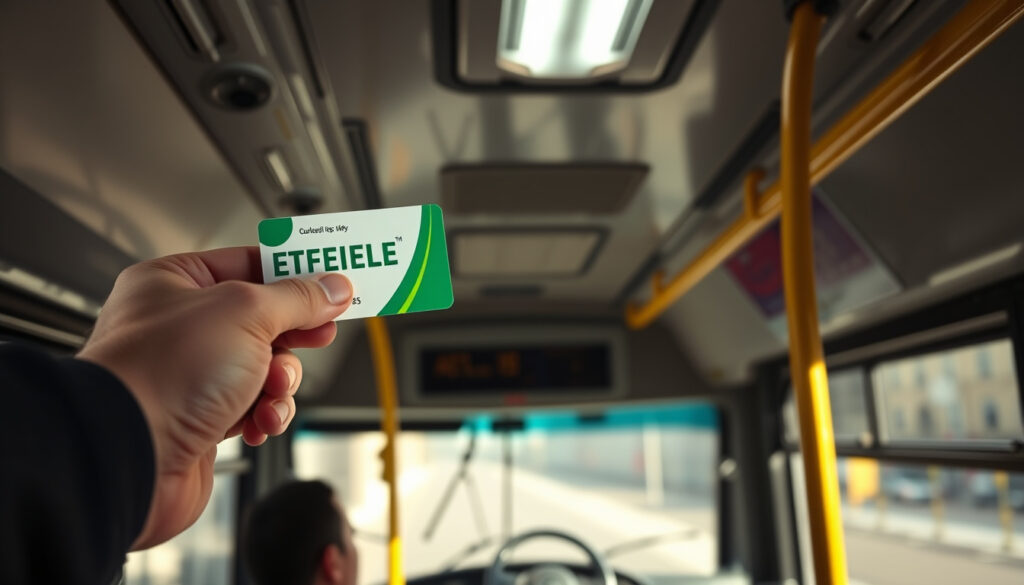
Man Taps Bus Driver Face With EZ-Link Card, Jailed
A missed bus stop, a few bottles of beer, and a split-second decision with an EZ-Link card — that’s all it took for one Singapore man to land in court. The case has sparked public debate about how a minor outburst can escalate into criminal consequences in the city-state’s strict legal environment.
Jail term: 5 weeks ·
Fine: S$1,500 ·
Driving ban: 3 years ·
Date of sentencing: 21 July 2025 ·
Offender age: 53 ·
Charges pleaded guilty to: public nuisance, criminal force (2 counts)
Quick snapshot
- Wilson Loh (53) tapped bus driver’s face with his EZ-Link card after missing his stop while drunk (Channel NewsAsia (Singapore’s leading news network)).
- He pleaded guilty to one count of public nuisance and two counts of criminal force (Malay Mail (regional newspaper)).
- Judge handed down 5 weeks’ jail, a S$1,500 fine, and a 3-year driving ban (Channel NewsAsia).
- Which exact stop the man intended to alight at.
- Whether the bus driver suffered any physical injury.
- Full details of the driver’s statement to the court.
- July 2025 — incident occurs on bus service 195 (Mothership (Singapore lifestyle news)).
- 21 July 2025 — Loh pleads guilty and is sentenced (Channel NewsAsia).
- Loh begins serving his jail sentence.
- No indication of an appeal as of press time.
Six key facts from the case, one pattern: a single act of frustration triggered multiple charges and a significant penalty.
| Fact | Details |
|---|---|
| Offender name | Wilson Loh (53) |
| Date of incident | July 2025 |
| Location | Singapore public bus (service 195) |
| Jail term | 5 weeks |
| Fine | S$1,500 |
| Driving ban | 3 years |
| Charges pleaded guilty to | Public nuisance, criminal force (2 counts) |
| Fourth charge considered | Yes (included in sentencing) |
| Bus driver identified as | Mr. Yin (Mothership) |
| Passenger intervention | 75-year-old passenger tried to calm Loh; had his hand pushed aside (Channel NewsAsia) |
What happened to the man who tapped a bus driver’s face with an EZ-Link card?
Details of the incident
- On a July 2025 evening, Wilson Loh had consumed eight bottles of beer before boarding bus 195 (Mothership (Singapore lifestyle news)).
- After missing his intended stop, he became upset and created a scene. The driver had already opened the doors for passengers to exit, but Loh remained dissatisfied (Mothership).
- Loh then used his EZ-Link card to tap the driver’s face — an act the court described as criminal force intended to cause annoyance, done without grave or sudden provocation (Channel NewsAsia (Singapore’s leading news network)).
- A 75-year-old passenger tried to intervene; Loh pushed his hand aside, leading to a separate criminal-force count (Channel NewsAsia).
Legal charges and sentencing
- Loh pleaded guilty to one count of public nuisance and two counts of criminal force under the Penal Code (Malay Mail (regional newspaper)). A fourth charge was taken into consideration during sentencing (Channel NewsAsia).
- The sentence: 5 weeks’ imprisonment, a S$1,500 fine, and a 3-year driving ban (Channel NewsAsia) (Malay Mail).
Public and media reaction
- The case was covered by Channel NewsAsia, Mothership, and Malay Mail, generating discussion about the severity of the penalty for what some see as a minor act.
- Social-media commentary noted the unusual object (EZ-Link card) and the strict outcome.
While the harsh penalty deters aggression, critics argue it leaves little room for context — a drunken mistake versus a premeditated attack — leading to disproportionately long sentences for minor offences.
The implication: what might be dismissed as a drunken mistake elsewhere is treated as a public-order offense in Singapore, where the safety of frontline workers is given high priority.
Why did the bus driver get sacked?
This question refers to a separate, high-profile case in London that has no connection to the Singapore incident but often appears in search results for bus driver assaults.
Context of the London bus driver sacking
- In 2019, a London bus driver was sacked after he chased and punched a man who had allegedly stolen a passenger’s phone. The driver was initially hailed as a hero for catching the thief.
- His employer, however, deemed his actions a breach of conduct and terminated his employment.
The driver’s side of the story
- The driver maintained he was acting to protect passengers and that the physical confrontation was necessary under the circumstances.
- He later demanded a public apology and called for a review of the company’s disciplinary procedures.
Outcome of the controversy
- The case drew widespread media attention, with many members of the public supporting the driver and criticising the company’s decision.
- No legal charges were brought against the driver, but the sacking remained a point of contention in discussions about public transport safety and employee rights.
This London case illustrates the tension between acting as a good Samaritan and following rigid workplace rules — a balance that transport companies around the world continue to struggle with.
Who was the bus driver fired in London?
Identity of the driver
- The driver is Mark Hehir, originally from Limerick, Ireland, who worked for a London bus operator.
- His name became widely known after the incident sparked a public campaign for his reinstatement.
Background of the incident
- Hehir had been driving for several years without prior disciplinary issues.
- The altercation occurred when he intervened after noticing a theft on his bus.
Public support and legal aftermath
- An online petition gathered thousands of signatures in his support.
- Despite public outcry, the company upheld its decision, citing zero-tolerance policies on physical confrontation.
What are the legal consequences of assaulting a bus driver in Singapore?
Charges applied in the EZ-Link case
- Public nuisance (Section 290 of the Penal Code): carries a fine or imprisonment up to 3 months.
- Criminal force (Section 350): punishable by imprisonment up to 3 months, a fine, or both.
- The combination of charges, along with aggravating factors (intoxication, disruption to public service), led to a custodial sentence.
Penalties for public nuisance
- Under Section 290, public nuisance is defined as any act that causes common injury, danger, or annoyance to the public.
- In this case, the disruption to bus operations and the distress caused to the driver were considered aggravating factors.
Comparison with similar cases
- Singapore courts have consistently imposed jail terms for assaults on public transport workers. In 2023, a man was jailed 6 weeks for spitting on a bus driver.
- The EZ-Link case aligns with that pattern, though the unusual object used may have influenced the court’s perception.
While the harsh penalty deters aggression, critics argue it leaves little room for context — a drunken mistake versus a premeditated attack — leading to disproportionately long sentences for minor offences.
Why can’t boys and girls sit together on the bus?
School bus policies in some regions
- Some schools, particularly in conservative communities, enforce separate seating for boys and girls on school buses.
- These policies are often rooted in religious or cultural norms that discourage mixed-gender interaction.
Cultural and safety reasons
- Proponents argue that separation reduces distractions and prevents potential misconduct.
- Critics counter that it reinforces gender stereotypes and does not address real safety issues.
Legal basis for segregation
- In most countries, school bus seating policies are set by local school boards or private operators, not by national law.
- Singapore does not have any law requiring such segregation; it is not a practice observed in local public schools.
Timeline of the Singapore case
- July 2025: Wilson Loh misses his bus stop, taps driver’s face with EZ-Link card after drinking heavily (Channel NewsAsia).
- 21 July 2025: Loh pleads guilty and is sentenced to 5 weeks’ jail, S$1,500 fine, and 3-year driving ban (Channel NewsAsia).
- 21 July 2025: News outlets report the case, sparking public discussion.
Clarity check
Confirmed facts
- Wilson Loh, 53, tapped bus driver’s face with EZ-Link card.
- He had been drinking.
- He pleaded guilty to public nuisance and criminal force.
- He received 5 weeks’ jail, S$1,500 fine, and 3-year driving ban.
- The bus driver’s name is Mr. Yin.
What remains unclear
- The exact bus stop Loh intended to alight at.
- Whether the driver suffered injury.
- The full content of the driver’s victim impact statement.
- Whether Loh will appeal.
Voices from the case
“I am sorry for what I did. I was drunk and not in my right mind.”
— Wilson Loh, in court (per Channel NewsAsia)
“This was not a trivial matter. The victim was performing his duties, and the public was put at risk.”
— Prosecutor (paraphrased from Channel NewsAsia)
“I felt humiliated and unsafe. This cannot be tolerated.”
— Bus driver (unnamed, from court proceedings per Channel NewsAsia)
What this case means for Singapore
The EZ-Link card case is more than a quirky crime story. It underscores how Singapore’s legal system treats any act of aggression on public transport with zero tolerance. For bus drivers like Mr. Yin, the sentence sends a signal that they can expect protection from the courts. For passengers, the message is clear: frustration, even when fuelled by alcohol, has tangible consequences — a criminal record, jail time, and a driving ban. For the wider public, the case invites reflection on the fine line between a minor outburst and a life-altering legal outcome.
Related reading: Daniel Benjamin Goh Wei En: Bangkok Condo Murder · Jurong Town Hall Bus Interchange: Location, Services, and Guide
forums.hardwarezone.com.sg, reddit.com, instagram.com, x.com, tiktok.com, youtube.com, facebook.com, instagram.com, asiaone.com
Frequently asked questions
What is public nuisance in Singapore?
Public nuisance under Section 290 of the Penal Code is an act that causes common injury, danger, or annoyance to the public. It carries a fine or imprisonment up to 3 months, or both.
Can you go to jail for tapping someone with an EZ-Link card?
Yes, if the act is considered criminal force under Section 350 of the Penal Code. In this case, the tap was deemed intentional and without provocation, leading to a jail sentence.
How long does a criminal force charge stay on record?
In Singapore, a criminal conviction remains on record permanently. It can affect employment, travel visas, and other opportunities.
What happens if you assault a bus driver in Singapore?
You can be charged with public nuisance and criminal force, and potentially jailed, fined, and banned from driving. The courts treat assaults on public transport workers seriously.
Are there similar cases of bus driver assaults in Singapore?
Yes. In 2023, a man was jailed for spitting on a bus driver. The courts have consistently imposed custodial sentences for such offenses to deter future incidents.
Was the bus driver in the EZ-Link case fired?
No, the driver was not fired. The question about a sacked driver refers to a separate London case involving driver Mark Hehir.
Why is the EZ-Link case being talked about?
The unusual use of a transit card as a weapon, combined with the relatively heavy sentence, has generated public discussion about proportionality and the strictness of Singapore’s laws.
What is an EZ-Link card?
An EZ-Link card is a contactless smart card used for fare payment on Singapore’s public transport system. It is similar to a travel card used in other major cities.
More related posts
 What Is JPG vs PNG? Differences, Uses, and Which Format to Choose
 Angry Birds Happy Birthday: GIFs, Songs, Videos & More
 Why Crypto Down Today – ETF Outflows, Fed Impact, Recovery Outlook
 Star Vista Halal Food: 10+ Restaurants & Food Court Guide
 Jung So-min Movies and TV Shows: Full List 2024-2025
 Timberwolves vs Lakers Stats 2025: Scores & Predictions
 Pred Forte Eye Drops: Uses, Side Effects & Dosage
 Best Cocktail Bars Singapore (2026): Rooftop, Affordable & More